Last updated: 2026-10-08

Expectations guide

Partner Expectations for Marriage Biodata | Guide

Partner expectations should communicate what matters without sounding like a job description. A good section tells the reader about values, location, career or family preferences that genuinely affect compatibility.

Quick answer

Write 2–4 sentences covering the qualities, lifestyle or practical arrangements that matter most. Be clear about important boundaries, but avoid an exhaustive checklist of appearance, salary, caste, location and personality requirements.

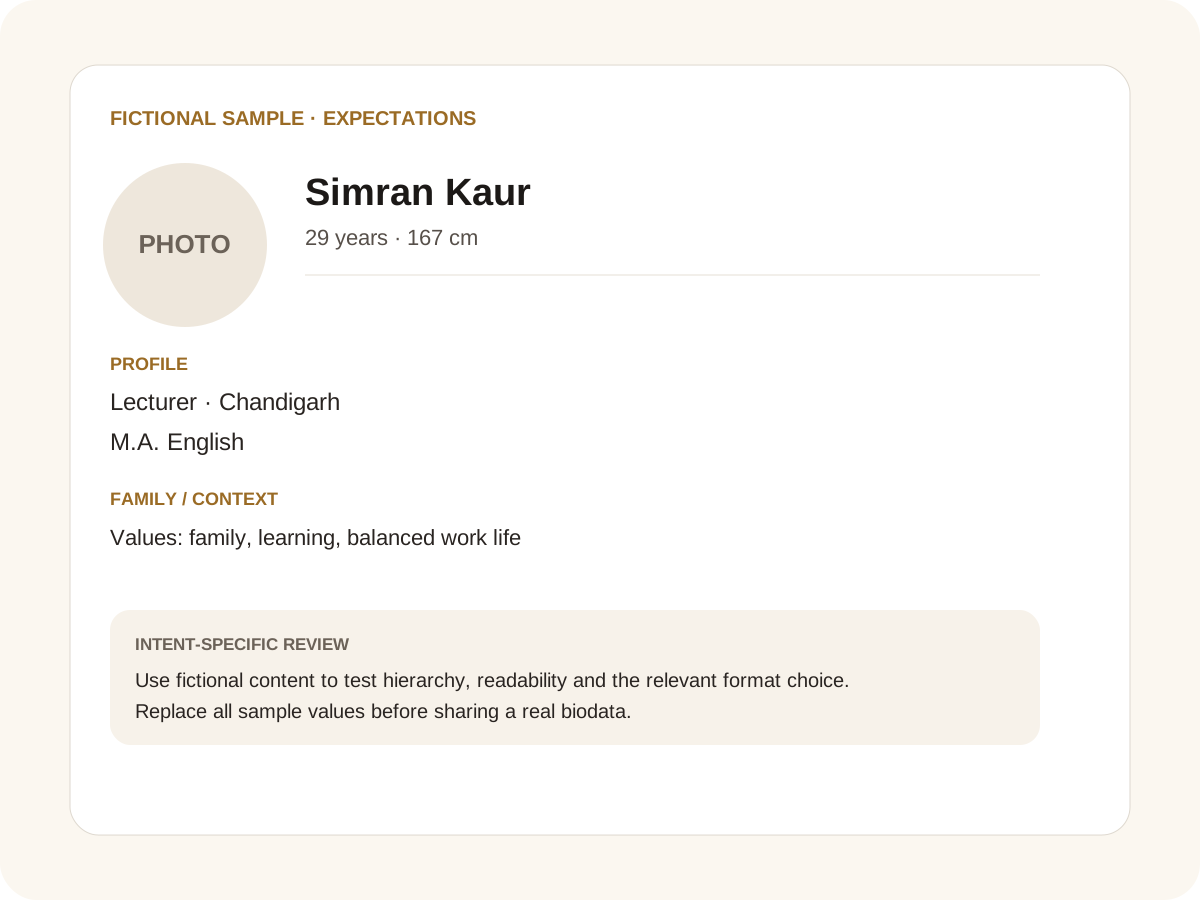
Fictional filled marriage biodata example for expectations
Fictional sample for layout guidance. Replace every value with your own verified information.

Filled sample

What this example demonstrates

  • ✓ A location and relocation expectation
  • ✓ A lifestyle-focused expectation
  • ✓ A family-involvement expectation

Choose the few things that really matter

Think about values first: respect, communication, family involvement, career support, lifestyle, faith or location. If you are open to relocation or an NRI match, say so. If staying near parents is important, say that too.

The goal is not to eliminate every possible mismatch in one paragraph. It is to help another family understand whether a conversation makes sense.

Examples for different situations

A general example: “Looking for a kind, educated partner who values family and open communication. I am happy to relocate for the right opportunity and would like both partners to support each other’s careers.”

An NRI example: “Open to a partner living in India or abroad. Comfortable discussing relocation after marriage, with career plans considered for both sides.”

What makes expectations feel respectful

Describe your own needs rather than judging other people. “I would like a partner who supports continued work” is clearer than “No conservative family.” “Prefer a city-based lifestyle” is more useful than a long list of places you refuse to live.

If a community or religious preference is genuinely important, state it honestly and respectfully. Do not use coded language that could be misunderstood.

Common mistakes for this intent

  • • Writing a checklist of impossible traits
  • • Using judgmental labels
  • • Avoiding practical issues such as location
  • • Copying generic expectations from another profile

Practical examples to compare

  1. 1. A location and relocation expectation
  2. 2. A lifestyle-focused expectation
  3. 3. A family-involvement expectation

How to use a expectations example

Partner expectations are most useful when they explain compatibility rather than demand a perfect candidate. The fictional example focuses on practical dimensions such as location, family involvement and lifestyle. These are topics that can materially change whether two families continue a conversation. Expectations should leave room for discussion and should describe the profile owner’s real priorities. A long list of ideal traits can make a biodata sound rigid without telling the reader what actually matters.

For this intent, the sample facts are deliberately fictional: Simran Kaur is shown as the profile name, while the rest of the values establish a believable context without representing a real person. The example uses 29 years · 167 cm, Lecturer · Chandigarh and M.A. English to show how personal, career and education information can sit together. The family line, “Values: family, learning, balanced work life,” demonstrates the amount of context that can be supplied without turning the first page into a family directory. Replace every value with verified information before sharing.

Three situations this format can handle

Three practical ways to use this format are worth testing. First, a location and relocation expectation. Second, a lifestyle-focused expectation. Third, a family-involvement expectation. These are different use cases rather than three versions of the same paragraph: one prioritises the information hierarchy, another changes the family context or audience, and the third tests how the design behaves when an optional requirement is introduced. Keeping those choices explicit makes it easier to explain why a particular template or field order was selected.

Review the finished expectations profile

The most useful review is a content review followed by a rendering review. Check the facts, spelling, dates, relationships and location first. Then inspect the final page at the size at which a parent or prospective match will actually read it. For this page, pay particular attention to expectations: it should be visible enough to answer the searcher’s question but should not overwhelm the rest of the profile. If a detail does not help a genuine first introduction, remove it rather than shrinking everything else.

A practical checklist

  • ✓ 2–4 sentences
  • ✓ Values before superficial criteria
  • ✓ Location and career preferences when relevant
  • ✓ Respectful language
  • ✓ Honest flexibility
  • ✓ Candidate-approved wording
Start a free biodata

Related biodata resources

Frequently asked questions

Usually two to four sentences. A short, clear section is easier to read and leaves room for a real conversation.