Last updated: 2026-10-08

About Me guide

About Myself for Marriage Biodata | Examples

The About Myself section should sound like a person speaking about their life, not like a list of adjectives. A short paragraph can show personality, work, family values and the kind of life you enjoy.

Quick answer

A good About Myself paragraph is usually 3–5 sentences. Mention what you do, a few genuine interests, how you spend your time and one or two values that matter to you. Avoid generic phrases unless you explain them with a real detail.

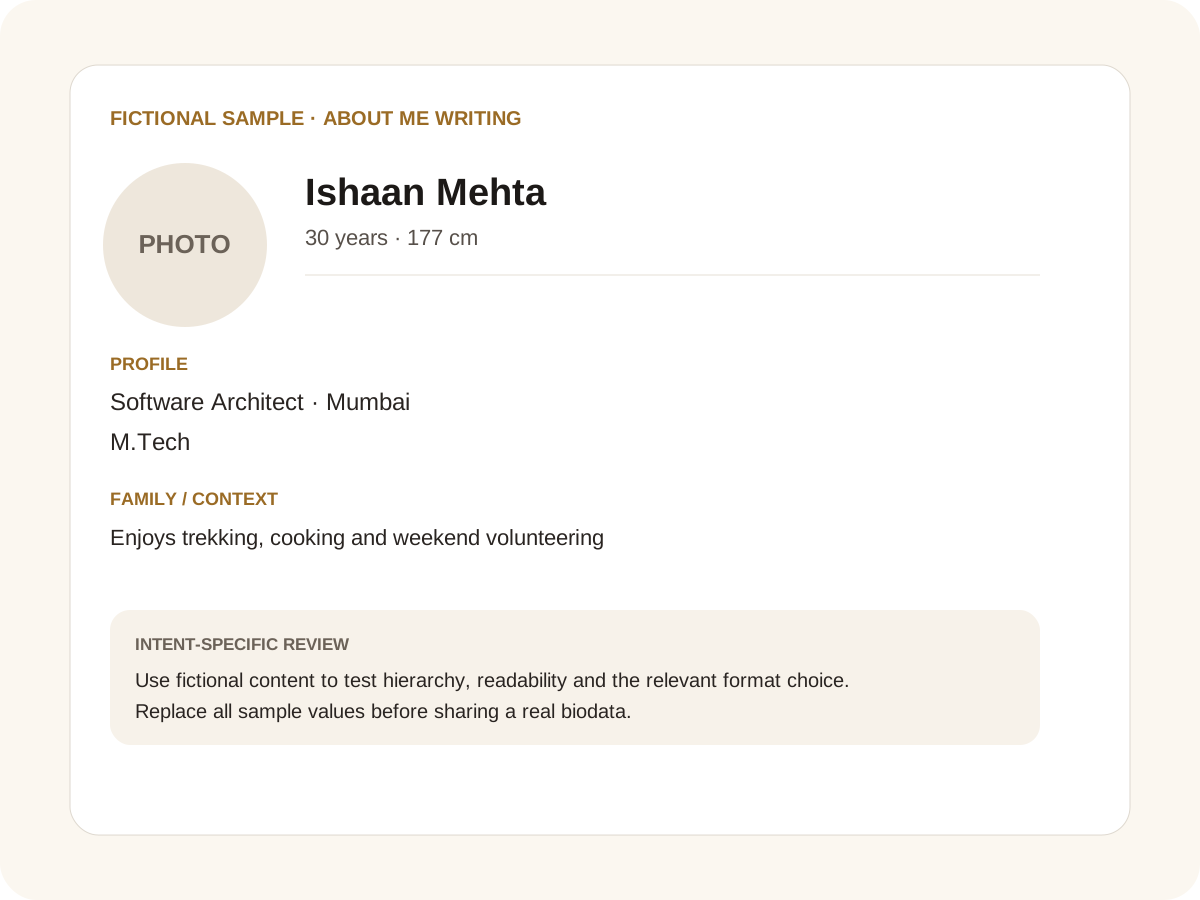
Fictional filled marriage biodata example for About Me writing
Fictional sample for layout guidance. Replace every value with your own verified information.

Filled sample

What this example demonstrates

  • ✓ A short professional About Me
  • ✓ A family-oriented About Me
  • ✓ A personality-led paragraph with concrete hobbies

A useful structure

Start with the present: education or work and where you live. Then add two or three personal details such as reading, fitness, travel, music, cooking, volunteering or time with family. Finish with a value or lifestyle preference that helps someone understand you.

Example: “I work as a software developer in Ahmedabad and enjoy building small side projects. Outside work I like cricket, weekend road trips and cooking with my family. I value a calm home life and would like to continue growing professionally after marriage.”

Write for a real conversation

The best profile summary gives another person an easy opening for conversation. If you enjoy classical music, mention what you listen to. If you travel, mention the kind of places you like. Specific details feel more credible than “I am simple, caring and down to earth.”

Do not turn About Me into a second résumé. Education and job details already have their own section.

What to avoid

Avoid exaggerated claims, copied lines, jokes that could be misunderstood and statements that describe other people rather than yourself. Keep the tone positive without presenting an unrealistic picture.

If the profile is being prepared by parents, make sure the candidate agrees with the wording. The person should recognise themselves in the final paragraph.

Common mistakes for this intent

  • • Writing generic lines such as “simple and caring”
  • • Turning About Me into a résumé summary
  • • Making claims that sound like guarantees
  • • Writing in a voice the person would never use

Practical examples to compare

  1. 1. A short professional About Me
  2. 2. A family-oriented About Me
  3. 3. A personality-led paragraph with concrete hobbies

How to use a About Me writing example

An About Me section earns its space when it sounds like a person rather than a catalogue of virtues. The fictional example uses work, interests and everyday activities to give the reader something concrete to understand. For a matrimonial profile, two or three specific details are usually more useful than a stack of adjectives. The writing should also be believable when spoken aloud by the person or their family, because that is often how the first conversation will continue.

For this intent, the sample facts are deliberately fictional: Ishaan Mehta is shown as the profile name, while the rest of the values establish a believable context without representing a real person. The example uses 30 years · 177 cm, Software Architect · Mumbai and M.Tech to show how personal, career and education information can sit together. The family line, “Enjoys trekking, cooking and weekend volunteering,” demonstrates the amount of context that can be supplied without turning the first page into a family directory. Replace every value with verified information before sharing.

Three situations this format can handle

Three practical ways to use this format are worth testing. First, a short professional about me. Second, a family-oriented about me. Third, a personality-led paragraph with concrete hobbies. These are different use cases rather than three versions of the same paragraph: one prioritises the information hierarchy, another changes the family context or audience, and the third tests how the design behaves when an optional requirement is introduced. Keeping those choices explicit makes it easier to explain why a particular template or field order was selected.

Review the finished About Me writing profile

The most useful review is a content review followed by a rendering review. Check the facts, spelling, dates, relationships and location first. Then inspect the final page at the size at which a parent or prospective match will actually read it. For this page, pay particular attention to About Me writing: it should be visible enough to answer the searcher’s question but should not overwhelm the rest of the profile. If a detail does not help a genuine first introduction, remove it rather than shrinking everything else.

A practical checklist

  • ✓ 3–5 sentences
  • ✓ Present work or education
  • ✓ Two or three genuine interests
  • ✓ One or two values
  • ✓ Natural language
  • ✓ Candidate-approved wording
Start a free biodata

Related biodata resources

Frequently asked questions

Three to five sentences is enough for most biodatas. The goal is personality and context, not a full autobiography.