Last updated: 2026-10-08

Islamic marriage format

Islamic Biodata for Marriage | Nikah Profile

An Islamic biodata for marriage can help families communicate faith, family, education and practical compatibility before a Nikah conversation. Religious terminology and expectations vary, so the profile should use the family’s own wording.

Quick answer

A practical Islamic marriage biodata can include personal details, family, education, occupation, city, faith-related preferences where relevant, About Me, expectations and contact details. Keep religious fields accurate and optional rather than assuming one standard for every Muslim family.

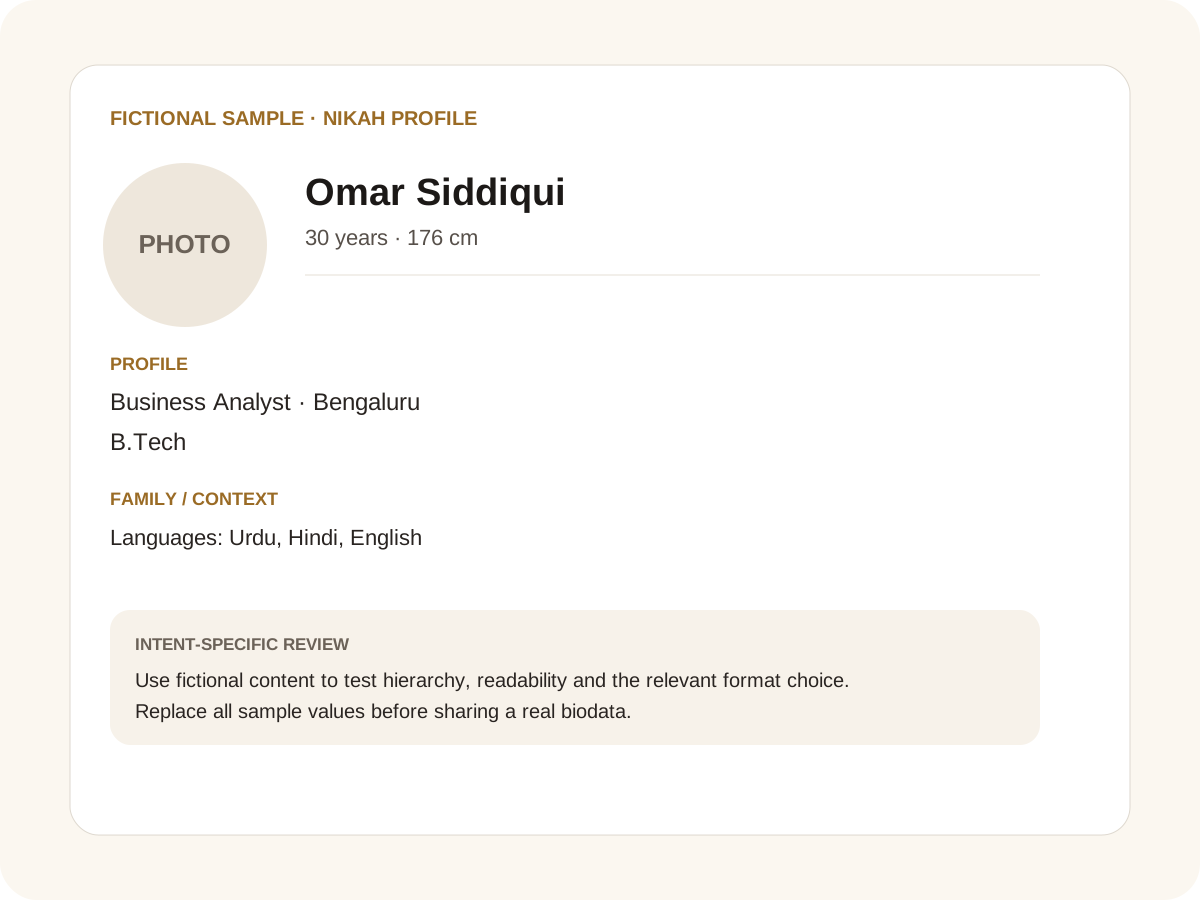
Fictional filled marriage biodata example for Nikah profile
Fictional sample for layout guidance. Replace every value with your own verified information.

Filled sample

What this example demonstrates

  • ✓ An Islamic matrimonial profile
  • ✓ A Nikah-oriented profile with family context
  • ✓ A profile with modest, clear expectations

Faith and personal details

Families may want to know about religious practice, lifestyle, sect or school of thought, or other faith-related preferences. These should be included only when the person and family actually consider them relevant.

Avoid making assumptions about someone’s beliefs from name, region or ethnicity. The candidate should control how their faith is described.

Family and education

Parents, siblings, education, occupation and current city provide practical context. For an NRI candidate, country and broad residency status can also be useful.

Do not publish passport, visa, identity or financial account information in a broadly shared biodata.

Bismillah and visual choices

The builder can support a Bismillah-style header or crescent-and-star visual treatment as an optional choice where the template supports it. The user can decide whether a religious header belongs in the final document.

The visual design should remain readable and respectful, with the person’s profile information taking priority.

Common mistakes for this intent

  • • Presenting cultural practice as a universal religious rule
  • • Adding sensitive family details unnecessarily
  • • Using copied religious wording without understanding it
  • • Leaving education and career information unclear

Practical examples to compare

  1. 1. An Islamic matrimonial profile
  2. 2. A Nikah-oriented profile with family context
  3. 3. A profile with modest, clear expectations

How to use a Nikah profile example

An Islamic marriage biodata should distinguish between what the family personally expects and what is presented as a religious requirement. The fictional example keeps the profile practical: education, work, family, language and expectations remain visible, while cultural context is described without universal claims. A Nikah-oriented page can be modest and clear without becoming vague. Sensitive family information should remain limited in the shareable version and can be discussed privately when a match progresses.

For this intent, the sample facts are deliberately fictional: Omar Siddiqui is shown as the profile name, while the rest of the values establish a believable context without representing a real person. The example uses 30 years · 176 cm, Business Analyst · Bengaluru and B.Tech to show how personal, career and education information can sit together. The family line, “Languages: Urdu, Hindi, English,” demonstrates the amount of context that can be supplied without turning the first page into a family directory. Replace every value with verified information before sharing.

Three situations this format can handle

Three practical ways to use this format are worth testing. First, an islamic matrimonial profile. Second, a nikah-oriented profile with family context. Third, a profile with modest, clear expectations. These are different use cases rather than three versions of the same paragraph: one prioritises the information hierarchy, another changes the family context or audience, and the third tests how the design behaves when an optional requirement is introduced. Keeping those choices explicit makes it easier to explain why a particular template or field order was selected.

Review the finished Nikah profile profile

The most useful review is a content review followed by a rendering review. Check the facts, spelling, dates, relationships and location first. Then inspect the final page at the size at which a parent or prospective match will actually read it. For this page, pay particular attention to Nikah profile: it should be visible enough to answer the searcher’s question but should not overwhelm the rest of the profile. If a detail does not help a genuine first introduction, remove it rather than shrinking everything else.

A practical checklist

  • ✓ Accurate faith description
  • ✓ Family and education
  • ✓ Occupation and city
  • ✓ Optional religious preferences
  • ✓ Respectful visual symbol if desired
  • ✓ Privacy-safe contact details
Start a free biodata

Related biodata resources

Frequently asked questions

Personal, family, education, occupation and expectations are a practical base, with faith-related fields added according to the person and family.