Last updated: 2026-10-08

Language format

Urdu Biodata for Marriage | Matrimonial Format

Families who prefer Urdu can use the same practical marriage-biodata structure while choosing labels and writing that fit their language preference. The important part is keeping the profile accurate and readable rather than translating every field mechanically.

Quick answer

An Urdu biodata for marriage can include personal details, family, education, occupation, religious information where relevant, About Me, expectations and contact details. Keep Arabic/Urdu religious terminology accurate and let the user decide which fields belong in the final profile.

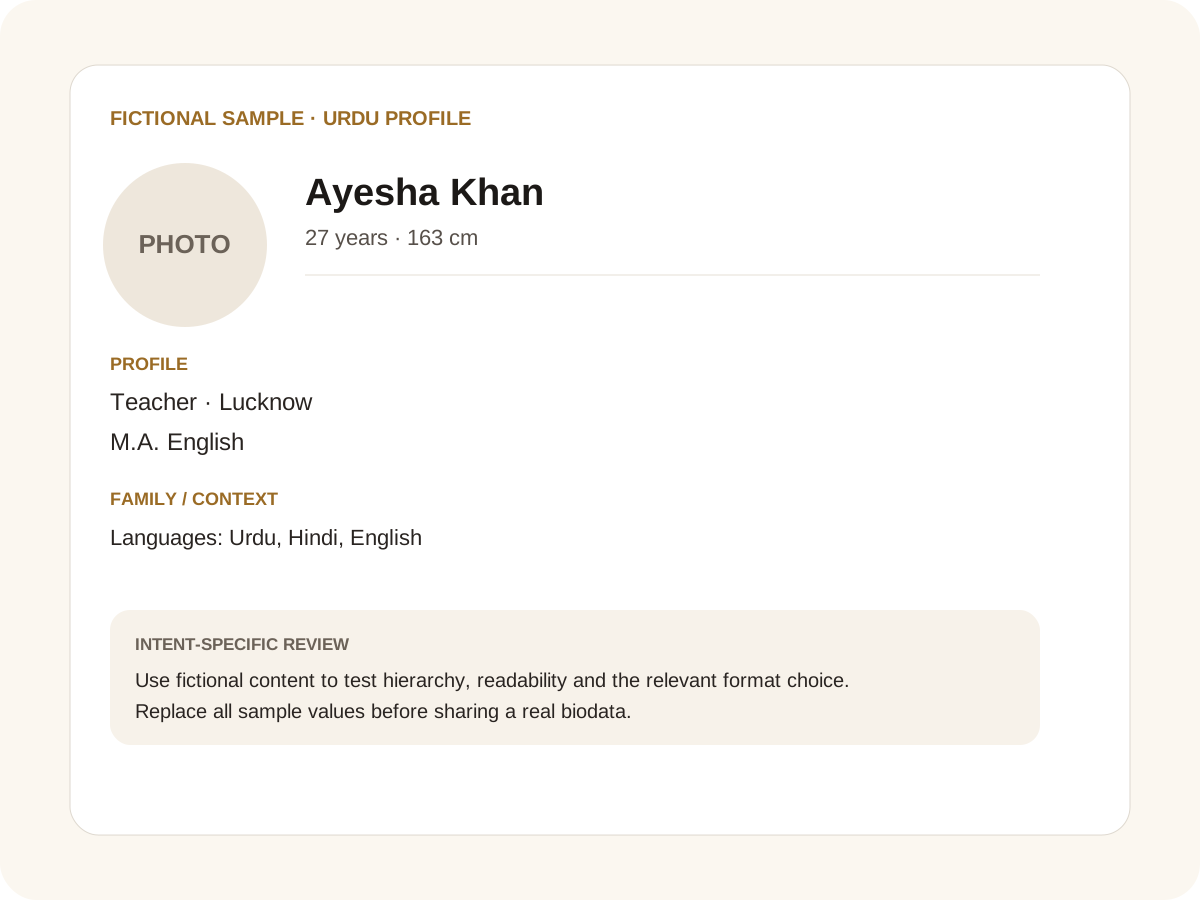
Fictional filled marriage biodata example for Urdu profile
Fictional sample for layout guidance. Replace every value with your own verified information.

Filled sample

What this example demonstrates

  • ✓ An Urdu-first family profile
  • ✓ A bilingual Urdu-English profile
  • ✓ A profile with concise family and education details

Language should serve the family

A bilingual or Urdu-first profile can help parents and relatives read the important details comfortably. Use consistent script and spelling for names, cities and occupations.

If the profile is shared with people who prefer English, a bilingual version can be useful. Keep the two versions aligned rather than translating one section and leaving another in a different language.

Islamic and family details

Depending on the family, fields such as sect or school of thought, prayer practice, halal lifestyle, family background or other religious preferences may be relevant. These should remain optional and should reflect the person’s own wording.

Avoid inventing religious classifications. If a field is important but unclear, confirm it with the family rather than selecting a label simply because it appears in a template.

Readable export

Script-aware fonts matter when a document is printed or exported. Check the final PDF on both phone and desktop and make sure Urdu text does not break or become too small.

For WhatsApp, an image can be convenient; for formal sharing, an A4 PDF is easier to print and archive.

Common mistakes for this intent

  • • Mixing scripts without checking line breaks
  • • Using transliteration where the family expects Urdu script
  • • Shrinking text to fit longer Urdu values
  • • Failing to proofread names and family terms

Practical examples to compare

  1. 1. An Urdu-first family profile
  2. 2. A bilingual Urdu-English profile
  3. 3. A profile with concise family and education details

How to use a Urdu profile example

An Urdu marriage biodata is a language and readability problem as much as a content problem. The fictional example focuses on a person’s current education, career, family and language ability, then leaves room for Urdu-first presentation. Regional script needs enough width and line height to remain readable after export. A profile that looks balanced in English can become crowded when the same facts are entered in a different script, so proofreading the rendered output is essential.

For this intent, the sample facts are deliberately fictional: Ayesha Khan is shown as the profile name, while the rest of the values establish a believable context without representing a real person. The example uses 27 years · 163 cm, Teacher · Lucknow and M.A. English to show how personal, career and education information can sit together. The family line, “Languages: Urdu, Hindi, English,” demonstrates the amount of context that can be supplied without turning the first page into a family directory. Replace every value with verified information before sharing.

Three situations this format can handle

Three practical ways to use this format are worth testing. First, an urdu-first family profile. Second, a bilingual urdu-english profile. Third, a profile with concise family and education details. These are different use cases rather than three versions of the same paragraph: one prioritises the information hierarchy, another changes the family context or audience, and the third tests how the design behaves when an optional requirement is introduced. Keeping those choices explicit makes it easier to explain why a particular template or field order was selected.

Review the finished Urdu profile profile

The most useful review is a content review followed by a rendering review. Check the facts, spelling, dates, relationships and location first. Then inspect the final page at the size at which a parent or prospective match will actually read it. For this page, pay particular attention to Urdu profile: it should be visible enough to answer the searcher’s question but should not overwhelm the rest of the profile. If a detail does not help a genuine first introduction, remove it rather than shrinking everything else.

A practical checklist

  • ✓ Correct Urdu spelling
  • ✓ Consistent bilingual labels if used
  • ✓ Optional Islamic/community fields
  • ✓ Clear education and occupation
  • ✓ Privacy-safe contact details
  • ✓ Check exported script on a phone
Start a free biodata

Related biodata resources

Frequently asked questions

Yes. The project supports regional-script workflows and the content structure can be used for Urdu-focused profiles.