Last updated: 2026-10-08

Second-chapter profiles

Divorcee Marriage Biodata Format | Practical Guide

A divorcee marriage biodata should be factual, respectful and focused on the person’s present life. It does not need to turn a previous marriage into the headline of the document, but it should not hide a fact that is important to a serious matrimonial conversation.

Quick answer

Keep the current profile prominent: personal details, education, career, family, interests and expectations. Mention a previous marriage briefly and accurately in a dedicated note when appropriate, and discuss legal or sensitive details privately rather than putting them into a widely forwarded document.

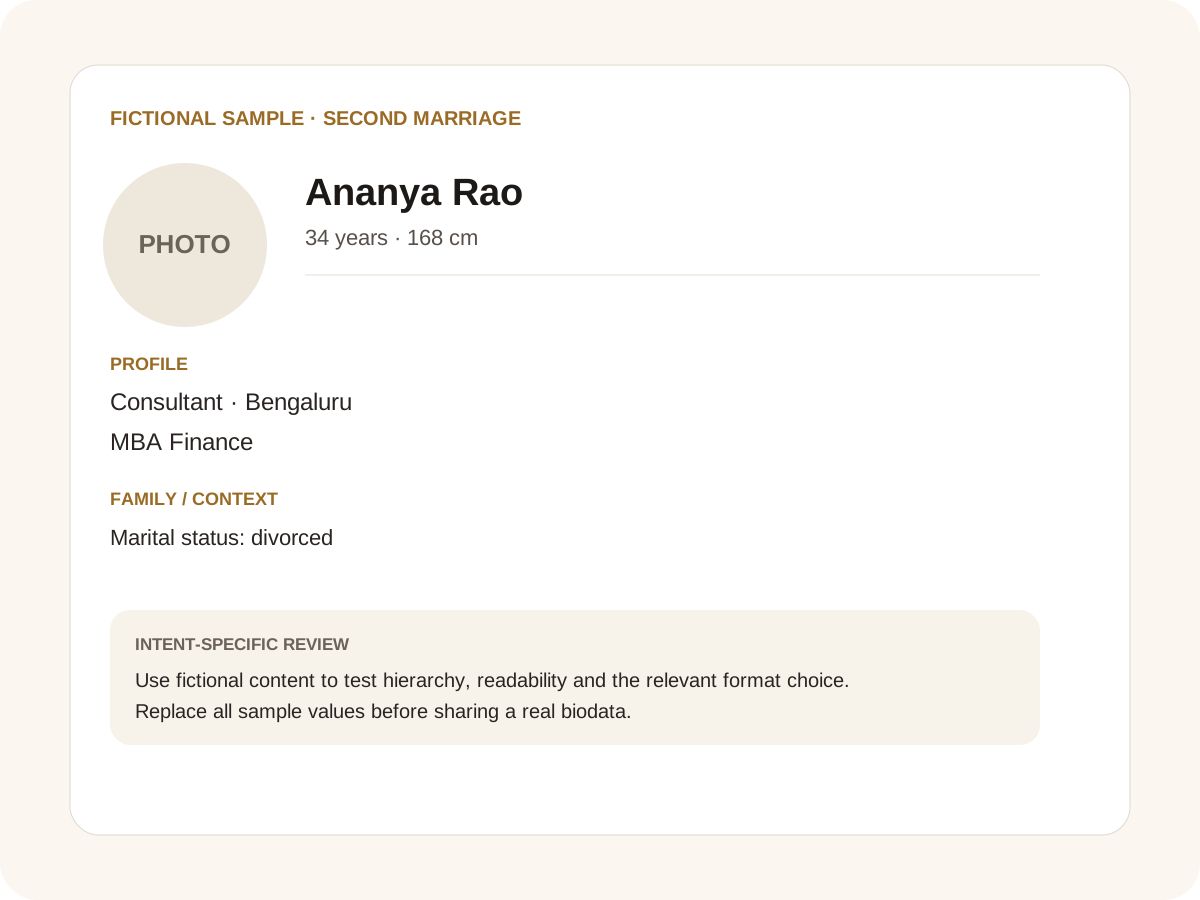
Fictional filled marriage biodata example for second marriage
Fictional sample for layout guidance. Replace every value with your own verified information.

Filled sample

What this example demonstrates

  • ✓ A concise previous-marriage note
  • ✓ A profile that focuses on current career and family
  • ✓ An expectations section covering future family plans

Use direct, neutral language

Avoid euphemisms that create confusion and avoid long explanations. A short statement such as “Previously married; legally divorced” may be enough for an introductory profile if that wording is accurate for the person.

If children, custody, relocation or other matters are relevant to a future match, describe them honestly in a way that respects privacy. Detailed legal documents do not belong in a public biodata.

Let the current person lead the profile

Education, career, family relationships, hobbies and expectations should have as much space as they would in any other marriage biodata. A second-chapter profile is still a complete introduction to a person.

Do not make claims about why a previous marriage ended unless the person is comfortable discussing them privately. The biodata should not become a public narrative about another person.

Share with care

Because these profiles can be forwarded widely, use a conservative contact and address strategy. Share additional personal or legal information only with a trusted family after both sides decide to continue.

The same PDF and Word export options work for a divorcee profile. The difference is primarily in wording and privacy, not in the quality of the design.

Common mistakes for this intent

  • • Hiding a material marital-status fact
  • • Publishing another person’s private information
  • • Turning the biodata into a long explanation of the divorce
  • • Sharing legal documents with the initial profile

Practical examples to compare

  1. 1. A concise previous-marriage note
  2. 2. A profile that focuses on current career and family
  3. 3. An expectations section covering future family plans

How to use a second marriage example

A second-marriage profile needs factual clarity without turning the document into a case history. The fictional example leads with present-day education, work, family and expectations, then gives marital status its appropriate place. That balance helps a serious reader understand the current situation while leaving sensitive questions for a private conversation. A respectful profile never needs to criticise a former spouse or speculate about reasons for a previous marriage.

For this intent, the sample facts are deliberately fictional: Ananya Rao is shown as the profile name, while the rest of the values establish a believable context without representing a real person. The example uses 34 years · 168 cm, Consultant · Bengaluru and MBA Finance to show how personal, career and education information can sit together. The family line, “Marital status: divorced,” demonstrates the amount of context that can be supplied without turning the first page into a family directory. Replace every value with verified information before sharing.

Three situations this format can handle

Three practical ways to use this format are worth testing. First, a concise previous-marriage note. Second, a profile that focuses on current career and family. Third, an expectations section covering future family plans. These are different use cases rather than three versions of the same paragraph: one prioritises the information hierarchy, another changes the family context or audience, and the third tests how the design behaves when an optional requirement is introduced. Keeping those choices explicit makes it easier to explain why a particular template or field order was selected.

Review the finished second marriage profile

The most useful review is a content review followed by a rendering review. Check the facts, spelling, dates, relationships and location first. Then inspect the final page at the size at which a parent or prospective match will actually read it. For this page, pay particular attention to second marriage: it should be visible enough to answer the searcher’s question but should not overwhelm the rest of the profile. If a detail does not help a genuine first introduction, remove it rather than shrinking everything else.

A practical checklist

  • ✓ Present-day personal and career details
  • ✓ Brief accurate previous-marriage note when appropriate
  • ✓ Relevant children/family information
  • ✓ Clear expectations
  • ✓ Privacy-safe contact details
  • ✓ Respectful language throughout
Start a free biodata

Related biodata resources

Frequently asked questions

For a serious matrimonial introduction, relevant previous-marriage information should be truthful. Keep the initial note concise and discuss sensitive details privately.