Last updated: 2026-10-08

Language-friendly builder

Bilingual Biodata Maker | English + Indian Language

A bilingual biodata can help when the candidate is comfortable in English but parents or relatives prefer an Indian language. The goal is not to duplicate every sentence; it is to make the key profile information understandable to both audiences.

Quick answer

Use English for shared professional terms when useful and provide regional-language labels or content for the sections families need to read. Keep names, dates and locations consistent between versions and proofread both scripts before exporting.

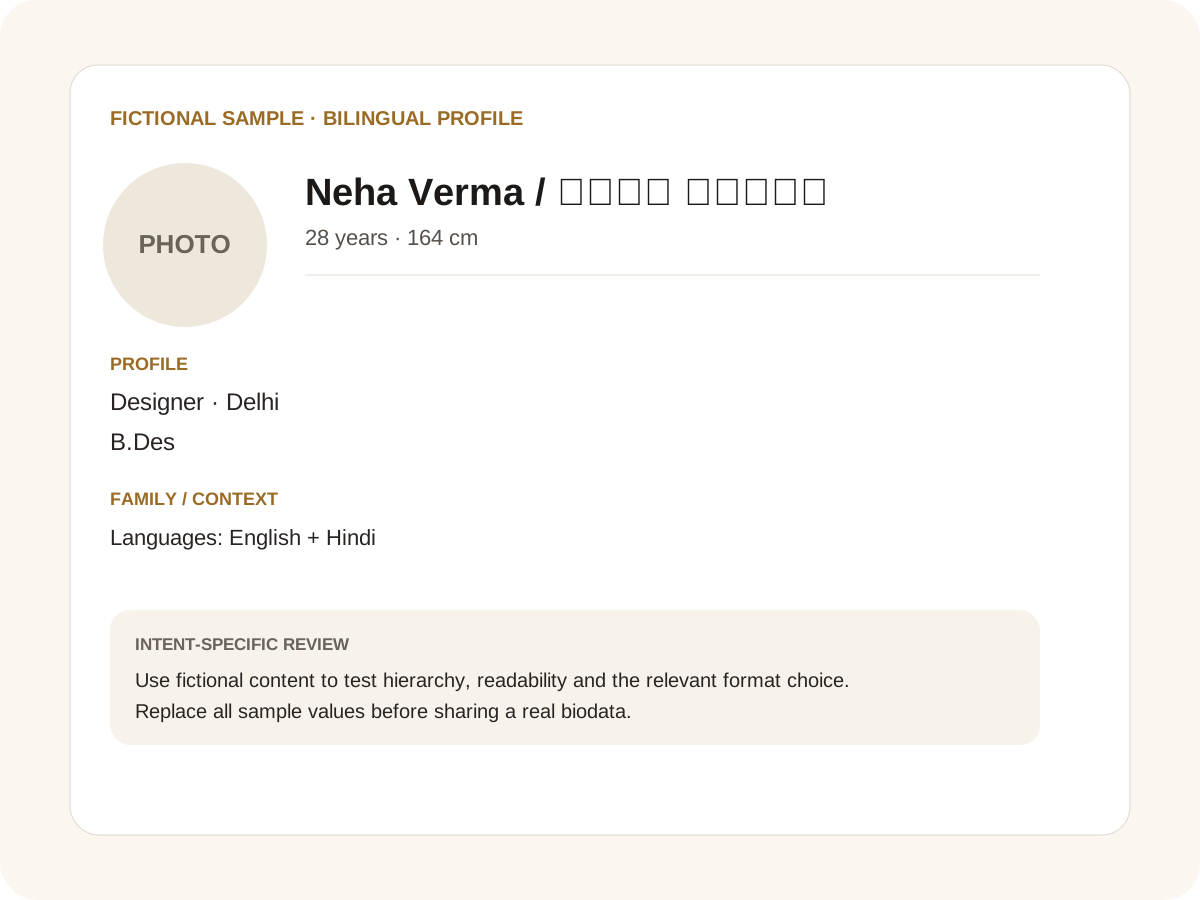
Fictional filled marriage biodata example for bilingual profile
Fictional sample for layout guidance. Replace every value with your own verified information.

Filled sample

What this example demonstrates

  • ✓ English plus Hindi field labels
  • ✓ A bilingual profile for parents and the individual
  • ✓ A profile where only the About Me section is bilingual

Choose the right level of translation

Field labels are often the most important part to translate: date of birth, height, education, occupation, family and expectations. A long bilingual paragraph can make the document crowded, so translate only the content that helps the intended reader.

For professional roles or company names, keeping the official English spelling can be more accurate than transliterating it.

Regional scripts need real space

Indian scripts can have different line lengths and shaping behaviour. A field that fits in English may wrap in Gujarati, Hindi, Marathi or another script. A premium builder should let the user preview the actual output instead of assuming one fixed width.

Use a script-aware font and check the PDF after export.

Useful for families across cities and countries

Bilingual profiles can be particularly helpful for NRI families or households where one generation reads English more comfortably and another prefers a regional language.

Keep the same facts in both languages. If one version says a different city, qualification or date, the confusion can undermine the profile.

Common mistakes for this intent

  • • Duplicating every paragraph unnecessarily
  • • Mixing translations with different facts
  • • Ignoring script readability in export
  • • Using language labels that do not match the actual content

Practical examples to compare

  1. 1. English plus Hindi field labels
  2. 2. A bilingual profile for parents and the individual
  3. 3. A profile where only the About Me section is bilingual

How to use a bilingual profile example

Bilingual biodata works best when each language has a clear role. The fictional example uses English alongside Hindi rather than duplicating every sentence twice. This keeps the page useful to both the individual and family members without doubling the document length. Before sharing, check that names, dates and relationship labels mean the same thing in both versions. A bilingual page should translate information, not introduce a second set of facts by accident.

For this intent, the sample facts are deliberately fictional: Neha Verma / नेहा वर्मा is shown as the profile name, while the rest of the values establish a believable context without representing a real person. The example uses 28 years · 164 cm, Designer · Delhi and B.Des to show how personal, career and education information can sit together. The family line, “Languages: English + Hindi,” demonstrates the amount of context that can be supplied without turning the first page into a family directory. Replace every value with verified information before sharing.

Three situations this format can handle

Three practical ways to use this format are worth testing. First, english plus hindi field labels. Second, a bilingual profile for parents and the individual. Third, a profile where only the about me section is bilingual. These are different use cases rather than three versions of the same paragraph: one prioritises the information hierarchy, another changes the family context or audience, and the third tests how the design behaves when an optional requirement is introduced. Keeping those choices explicit makes it easier to explain why a particular template or field order was selected.

Review the finished bilingual profile profile

The most useful review is a content review followed by a rendering review. Check the facts, spelling, dates, relationships and location first. Then inspect the final page at the size at which a parent or prospective match will actually read it. For this page, pay particular attention to bilingual profile: it should be visible enough to answer the searcher’s question but should not overwhelm the rest of the profile. If a detail does not help a genuine first introduction, remove it rather than shrinking everything else.

A practical checklist

  • ✓ Choose two readable languages
  • ✓ Keep facts consistent
  • ✓ Use script-aware typography
  • ✓ Avoid unnecessary duplicate paragraphs
  • ✓ Preview on mobile
  • ✓ Check PDF and Word exports
Start a free biodata

Related biodata resources

Frequently asked questions

It means the key information is presented so that people using two languages can understand the profile, often English plus a regional Indian language.