Last updated: 2026-10-08

Horoscope-aware format

Kundali Marriage Biodata | Gotra, Rashi & Nakshatra

Some families want the marriage biodata to carry a compact summary of the information used alongside a kundali or horoscope. Others exchange a separate horoscope document. This guide keeps those choices optional.

Quick answer

A kundali-friendly marriage biodata can include date, time and place of birth plus optional gotra, rashi, nakshatra, manglik status and other family-approved fields. It should not replace the family’s actual horoscope document when one is required.

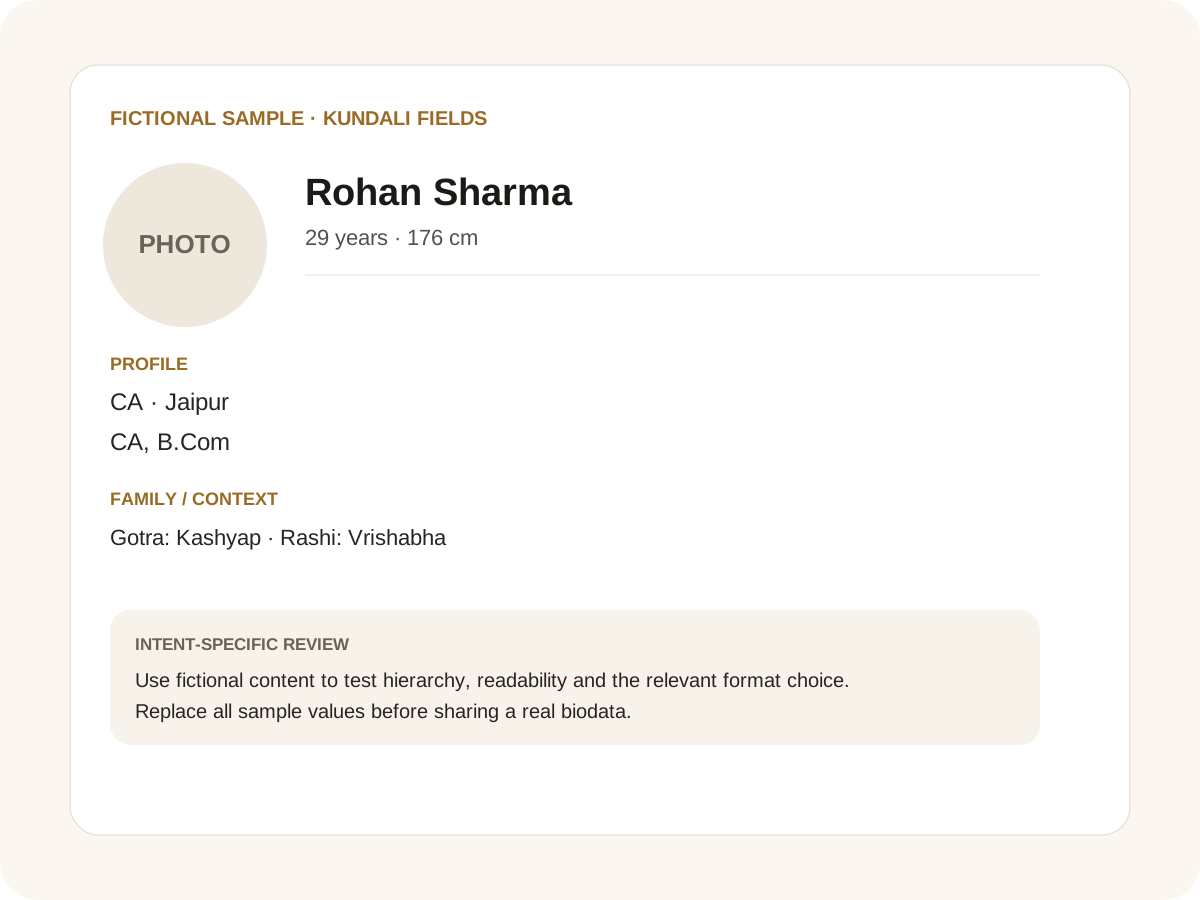
Fictional filled marriage biodata example for kundali fields
Fictional sample for layout guidance. Replace every value with your own verified information.

Filled sample

What this example demonstrates

  • ✓ A profile with gotra and rashi
  • ✓ A profile adding nakshatra and manglik status
  • ✓ A modern layout with traditional horoscope fields

Birth details first

Date, time and place of birth are the most useful source fields because they can be used to prepare or cross-check a separate horoscope. Enter them exactly as the family record provides them.

If the time of birth is uncertain, say so rather than inventing a precise time. Accuracy is more valuable than filling every box.

Optional matching fields

Gotra, rashi, nakshatra and manglik status can be added when the family uses them. These terms and matching practices vary, so the biodata should record the family-provided information rather than trying to infer it automatically.

If the family uses a separate kundali, link or mention it in the sharing conversation instead of putting a full chart on the main biodata page.

Keep the human profile visible

Horoscope information should not crowd out education, career, family and personality. A matrimonial profile still needs to answer the basic question: who is this person and what kind of life are they building?

Use the optional-field controls to keep the document focused. Add custom fields only when a specific family practice requires them.

Common mistakes for this intent

  • • Treating horoscope fields as universal requirements
  • • Entering uncertain birth details as facts
  • • Crowding the first page with every astrological value
  • • Publishing documents containing unrelated personal data

Practical examples to compare

  1. 1. A profile with gotra and rashi
  2. 2. A profile adding nakshatra and manglik status
  3. 3. A modern layout with traditional horoscope fields

How to use a kundali fields example

Kundali-oriented biodatas often carry more structured cultural information than a general format. The fictional example shows gotra and rashi as labelled values rather than burying them in prose. That makes verification easier and leaves the rest of the profile readable. Where birth details are uncertain, the safer approach is to verify them before publishing. A format should provide a place for information; it should not turn an unchecked value into a fact.

For this intent, the sample facts are deliberately fictional: Rohan Sharma is shown as the profile name, while the rest of the values establish a believable context without representing a real person. The example uses 29 years · 176 cm, CA · Jaipur and CA, B.Com to show how personal, career and education information can sit together. The family line, “Gotra: Kashyap · Rashi: Vrishabha,” demonstrates the amount of context that can be supplied without turning the first page into a family directory. Replace every value with verified information before sharing.

Three situations this format can handle

Three practical ways to use this format are worth testing. First, a profile with gotra and rashi. Second, a profile adding nakshatra and manglik status. Third, a modern layout with traditional horoscope fields. These are different use cases rather than three versions of the same paragraph: one prioritises the information hierarchy, another changes the family context or audience, and the third tests how the design behaves when an optional requirement is introduced. Keeping those choices explicit makes it easier to explain why a particular template or field order was selected.

Review the finished kundali fields profile

The most useful review is a content review followed by a rendering review. Check the facts, spelling, dates, relationships and location first. Then inspect the final page at the size at which a parent or prospective match will actually read it. For this page, pay particular attention to kundali fields: it should be visible enough to answer the searcher’s question but should not overwhelm the rest of the profile. If a detail does not help a genuine first introduction, remove it rather than shrinking everything else.

A practical checklist

  • ✓ Accurate birth date
  • ✓ Birth time and place
  • ✓ Gotra when relevant
  • ✓ Rashi and nakshatra when verified
  • ✓ Manglik status if family uses it
  • ✓ Separate kundali when needed
Start a free biodata

Related biodata resources

Frequently asked questions

Common optional fields include birth date, birth time, birth place, gotra, rashi, nakshatra and manglik status. Families should use the information they have verified.