Last updated: 2026-10-08

Family section guide

Family Details in Marriage Biodata | What to Include

Family details help a matrimonial reader understand the person’s background, but the section should stay factual and privacy-conscious. A short list of parents, siblings and family context is usually more useful than a long description of status or assets.

Quick answer

Include parents’ names and occupations, siblings, family type, family status when relevant, native place and any community or lineage fields your family actually uses. Avoid publishing detailed addresses, identity numbers or private financial information.

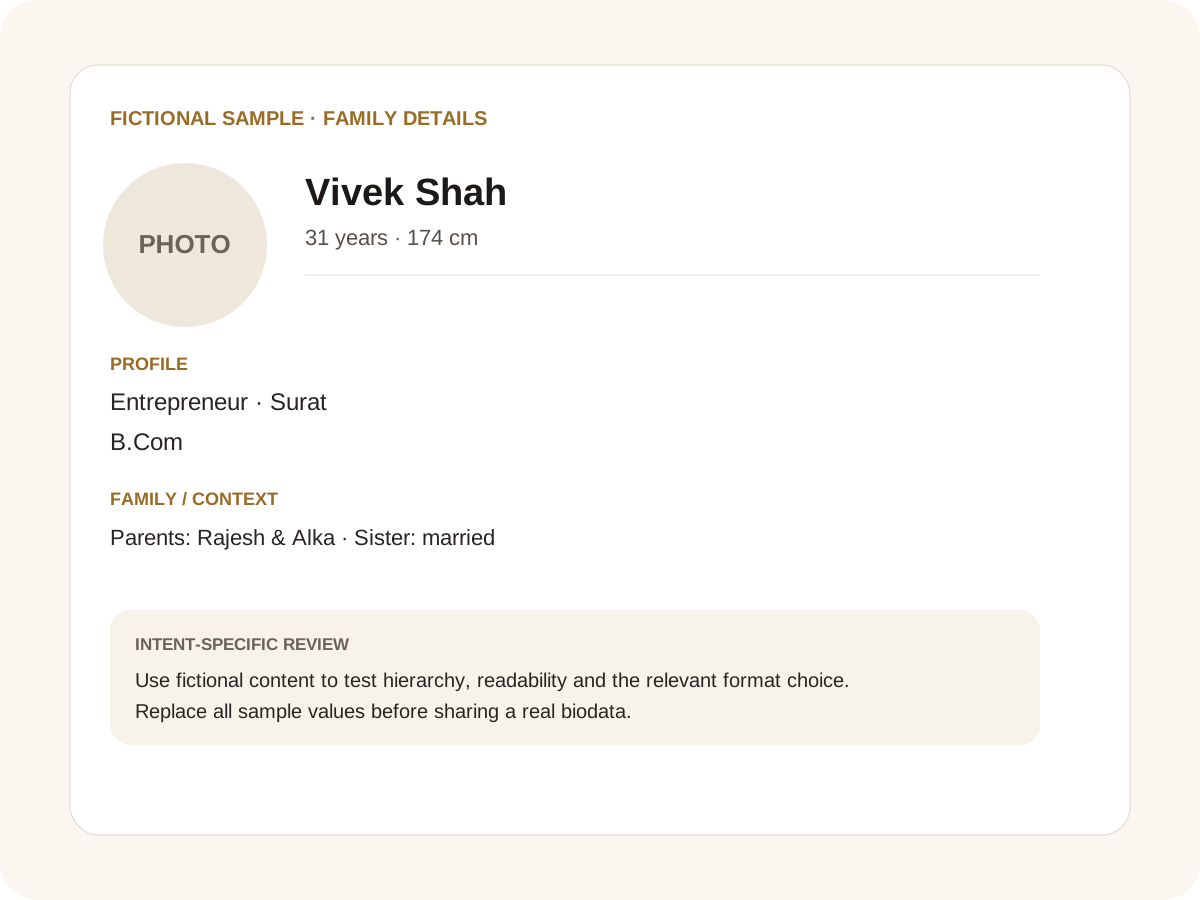
Fictional filled marriage biodata example for family details
Fictional sample for layout guidance. Replace every value with your own verified information.

Filled sample

What this example demonstrates

  • ✓ A compact nuclear-family description
  • ✓ A joint-family profile
  • ✓ A family-business background paragraph

Parents and siblings

Parents’ names and occupations are common. For siblings, mention number and broad status such as married/unmarried when that is relevant to your family’s usual biodata practice. Do not include phone numbers or private details about siblings unless they have agreed.

If a parent is retired, self-employed or deceased, use accurate and respectful wording. The family section should not hide important current responsibilities.

Family type, status and native place

Nuclear, joint or another accurate description can help set expectations about household arrangements. Native place can be useful when the family has strong ancestral roots even if everyone now lives in a different city.

Avoid vague claims such as “high-status family” when a simple factual description is more useful. Education, occupations and the family’s current city usually provide enough context.

Community fields are optional

Gotra, caste, sub-caste, kuldevi, devak, mosal, pravar or other community-specific details can be important for some families. They should not be treated as universal requirements.

Use the exact terminology your family uses. If you are unsure about a traditional field, ask an elder rather than selecting a value because it appears in another biodata.

Common mistakes for this intent

  • • Publishing full addresses of relatives
  • • Listing relatives without context
  • • Turning family details into a financial statement
  • • Leaving relationships ambiguous

Practical examples to compare

  1. 1. A compact nuclear-family description
  2. 2. A joint-family profile
  3. 3. A family-business background paragraph

How to use a family details example

Family details work best as context, not as a directory. The fictional example names relationships and broad background while avoiding private addresses and unnecessary financial detail. Readers usually need to understand who is in the immediate family, where the family is based and whether there are meaningful responsibilities or family-business ties. The exact level of detail should match the people who will receive the document; a first introduction does not need every relative’s biography.

For this intent, the sample facts are deliberately fictional: Vivek Shah is shown as the profile name, while the rest of the values establish a believable context without representing a real person. The example uses 31 years · 174 cm, Entrepreneur · Surat and B.Com to show how personal, career and education information can sit together. The family line, “Parents: Rajesh & Alka · Sister: married,” demonstrates the amount of context that can be supplied without turning the first page into a family directory. Replace every value with verified information before sharing.

Three situations this format can handle

Three practical ways to use this format are worth testing. First, a compact nuclear-family description. Second, a joint-family profile. Third, a family-business background paragraph. These are different use cases rather than three versions of the same paragraph: one prioritises the information hierarchy, another changes the family context or audience, and the third tests how the design behaves when an optional requirement is introduced. Keeping those choices explicit makes it easier to explain why a particular template or field order was selected.

Review the finished family details profile

The most useful review is a content review followed by a rendering review. Check the facts, spelling, dates, relationships and location first. Then inspect the final page at the size at which a parent or prospective match will actually read it. For this page, pay particular attention to family details: it should be visible enough to answer the searcher’s question but should not overwhelm the rest of the profile. If a detail does not help a genuine first introduction, remove it rather than shrinking everything else.

A practical checklist

  • ✓ Parents and occupations
  • ✓ Siblings and broad status
  • ✓ Family type when useful
  • ✓ Native place
  • ✓ Verified community fields
  • ✓ No unnecessary private identifiers
Start a free biodata

Related biodata resources

Frequently asked questions

Parents, occupations, siblings, family type, native place and selected community fields are common. Include only information the family is comfortable sharing.